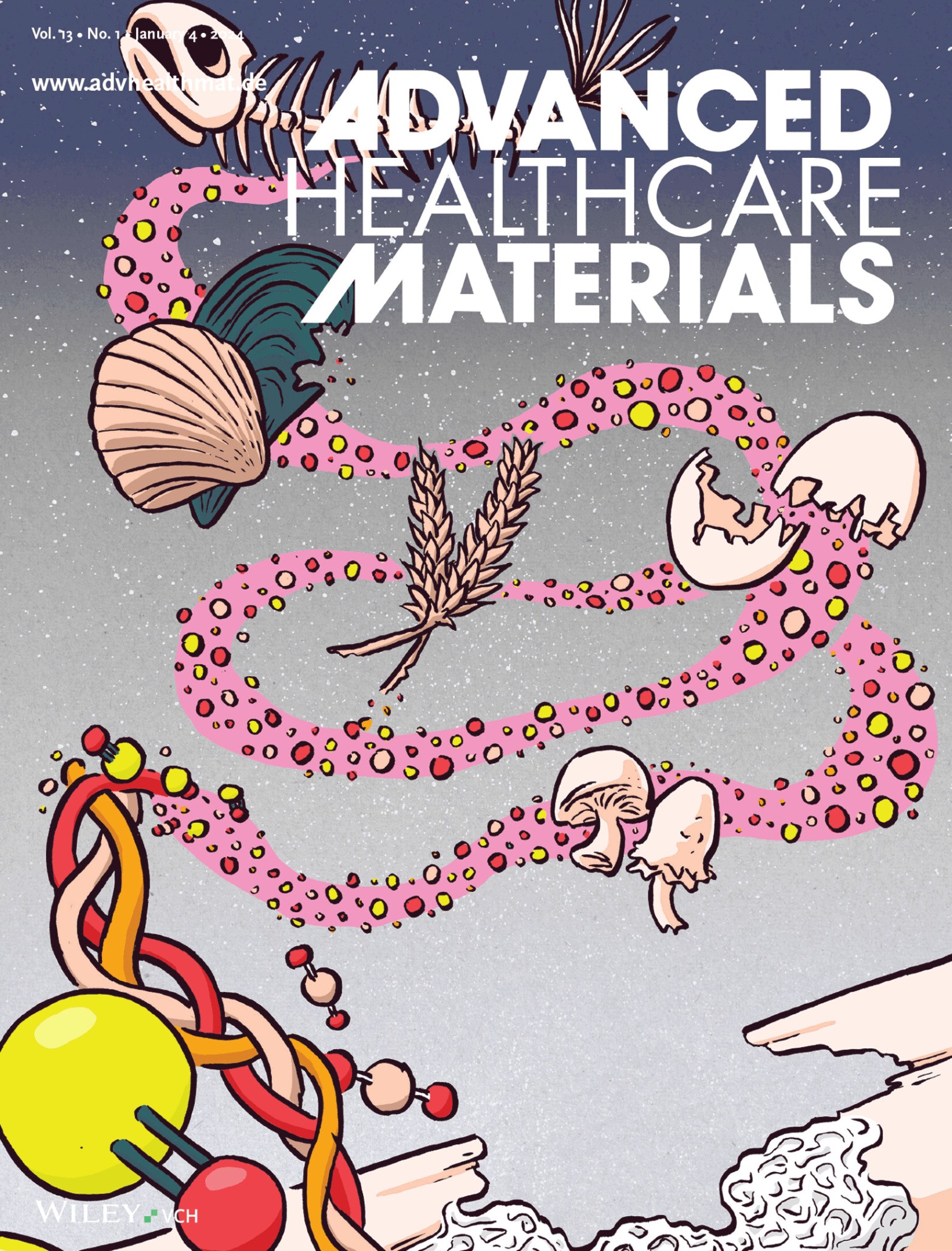
The need for sustainable development has never been more urgent, as the world continues to struggle with environmental challenges, such as climate change, pollution, and dwindling natural resources.
The use of renewable and recycled waste materials as a source of raw materials for biomaterials and tissue engineering is a promising avenue for sustainable development.
Our review article provides an overview of waste materials, such as eggshells, seashells, fish residues, and agricultural biomass, that can be transformed into biomaterials for bone tissue engineering. While the development of recycled metals is in its early stages, we highlight the use of probiotics and renewable polymers to improve the bio-functionalities of bone implants.
Despite the advances of additive manufacturing, the studies of 3D printed waste-derived bone substitutes are limited.
It is foreseeable that additive manufacturing (AM) technologies can provide a more sustainable alternative to manufacturing biomaterials and implants. The preliminary results of eggshell and seashell-derived calcium phosphate and rice husk ash-derived silica will likely pave the way for more advanced applications of AM waste-derived biomaterials for sustainably addressing several unmet clinical applications.
 NIKO EKA PUTRA